A closer look at Spinwin skill after the first discard

13 cards. Two sequences required. One of them pure. Those are the only numbers this desk will treat as firm. A win rate is not among them.
The decision that exists after the first discard
The pack has already been shuffled. Skill starts when you choose which card becomes public. A discard that completes a neighbour's pure run is a gift you cannot take back. A discard that dumps your only connector can freeze your own pure-run path.
That trade is real. It is also bounded. You do not control the next closed card. Treating the discard as a method that forces a joker is a category error.
Middle cards versus high deadwood
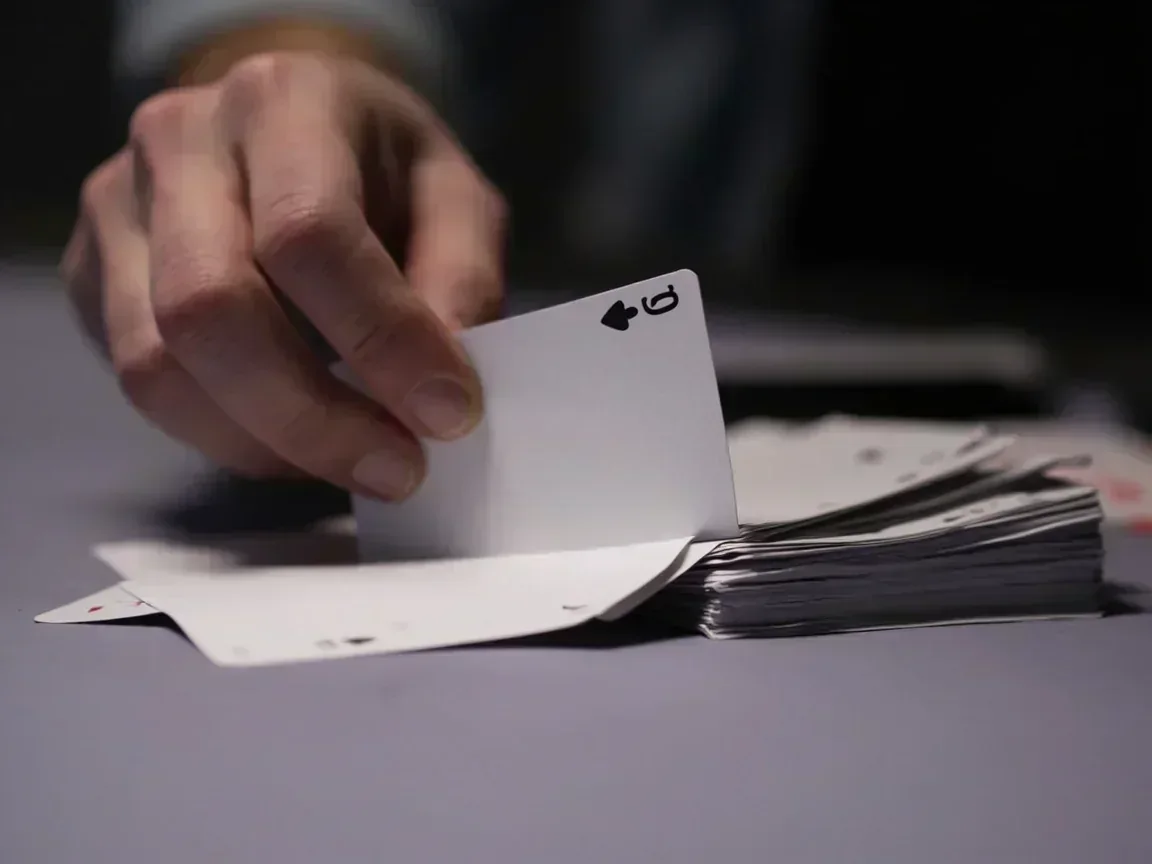
A 7 of clubs can finish 5-6-7 or 7-8-9. It is a connector. A king of diamonds that shares no partner is 10 points of deadwood in the common count. Keeping the king because it feels strong is not skill. Keeping the 7 while you still have a path to a pure run can be.
The limit: if the rest of the hand is already a full-count threat, the connector may not be affordable. Cost-benefit here is penalty points versus remaining outs, not a slogan about patience.
Why hunting both jokers is not a method
Printed jokers are finite. The wild joker is one rank. The closed deck does not owe you either. A plan that waits for both jokers before forming a pure sequence often dies on a full count. Form the pure run from natural cards when the cards allow it. Use jokers on the impure run or the set.
What strategy cannot do
It cannot change the shuffle. It cannot make an invalid show valid. It cannot turn Pool 201 into a short Points table. It cannot replace a stop rule. Anyone selling a guaranteed declare is selling something this desk will not repeat.
Session stops after N drops
A practical stop is a number you pick before the first seat: three first-drops, or one full count, or 40 minutes. After the stop, you leave even if the next pack looks friendly. That is a control, not a superstition. Map the control on responsible play.
When the client fights the decision
If discard targets overlap, if the open pile is hidden behind a banner, or if the show button shares a hit area with drop, the product is now part of the risk. That is a usability problem. Take it to the inspection ledger rather than forcing another hand.
Two questions this route leaves open
Does the current Spinwin build show outs or only the raw rail? This desk has not captured a screenshot that answers that.
Does a given table print drop values before the first card? If it does not, strategy is being asked to work without its cheapest exit. Review platform usability next, not a second theory of jokers.
The discard is a public sentence
Whatever you throw becomes a sentence the rest of the table can read. A six of hearts that completes a visible five-seven is a gift. A high diamond that you dump because it felt heavy can be the last card someone needed for a set. Skill is noticing that the sentence will be read. Chance is whatever comes off the closed pile next.
People dress the second fact up as a system. It is not a system. You can reduce how often you publish a useful card. You cannot force the next wild joker.
Count outs only while they exist
A connector has outs when neighboring ranks in that suit are still unseen. Those outs shrink when the suit appears in the discard or in someone else’s flatten. Continuing to treat the connector as sacred after the outs die is a habit, not analysis.
High deadwood has a simpler arithmetic. It is expensive if a show happens now. It is affordable if a pure run is one natural card away and that card is still plausible. Affordable is not lucky. It is a comparison you can state.
Stop rules are strategy too
Three first-drops, one full count, or forty minutes: pick the number before the first seat. After it trips, leave even if the next pack looks kind. A plan that exists only while you are winning is not a plan.
Pool 201 without a stop is not a brave read. It is an invitation for the threshold to set the stop for you. Set the control on the responsible-play route before you argue about middle cards.
When the interface becomes the opponent
Overlapping hit targets, a show button that shares space with drop, a banner covering the open pile: those are not card problems. They are usability problems. Another theory of jokers will not fix a mis-tap. Inspect the client on the reviews ledger and, if the defect remains, do not sit.
Two rails after the same first discard
Rail A keeps a club 7 because 5 and 9 are unseen, and throws a lone king. Rail B keeps the king because kings feel strong, and throws the 7 because it looks ordinary. Both rails had the same first pickup. Only one of them can still state a pure-run path.
If the 5 of clubs then appears in the open pile, Rail A’s outs shrink. The 7 becomes less affordable. Updating that fact is the work. Pretending the 7 is still sacred is not.
If a neighbour flattens clubs, Rail A should stop paying for the connector. Chance just spoke. Skill is hearing it.
Neither rail can force a joker. A plan that waits for both jokers before forming a pure run will meet a full count more often than a plan that builds the pure run from natural cards when the cards allow it.
After three first-drops or one full count, the session math should end the experiment. Another clever discard is not a refund.
If the client hides the open pile behind a banner while you try this work, the opponent is the interface. Take that to the usability ledger.
Leave conditions that are not superstition
Three first-drops. One full count. Forty minutes. A hidden open pile. A show button that shares a target with drop. Any one of those is enough to stand up.
Skill after the first discard includes the skill of ending the session. Chance will keep dealing if you stay.
Inspect the client next if the interface caused the leave. Otherwise set the stop on responsible play and do not invent a new theory of jokers tonight.
A connector with dead outs is not a personality test. Throw it. A king that blocks a pure-run confirm is not a trophy. Throw it.
The closed pile remains unread. That sentence is the boundary of this route.
Affordability is a sentence you can say
A connector is affordable while unseen neighbors in that suit still exist and deadwood is not already a full-count threat. Say that sentence. If you cannot, the connector is nostalgia. Throw it. Chance still owns the closed pile after you do.
Ending is a legal skill choice
Standing up after the stop number is as much a discard decision as throwing a king. The pack will keep offering pretty rails. The stop does not care. Inspect the client if the interface caused the mess. Otherwise leave.
Words that bound a discard
Affordable connector
A middle card is affordable only while unseen neighbors remain and deadwood is not already a full count. If you cannot say that sentence, throw the connector.
Public sentence
A discard is read by every other seat. Skill is noticing that. Chance is the next closed card. Those two facts should not be merged into a system.
Close the rail when the sentence is done
If you can already say whether the connector is affordable, the work of this route is finished. Another metaphor about chance will not make the closed pile kinder. Inspect the client if the interface caused the error. Otherwise stand up.
Questions this route can answer
Is there a card-counting system for 13-card rummy?
This desk does not teach one. Hidden cards and reshuffles between hands limit what counting can do. Anyone promising a forced win is outside this route.
Should I keep every middle card?
No. Afford the connector only while a pure-run path still exists and deadwood is not already a full-count threat.
What is the next action after reading this?
Inspect access and support on the reviews ledger. Play is not the first control here.