How to inspect Spinwin access: a practical evidence guide
The unanswered question is not whether a stranger liked the app. It is whether you can seat, discard, declare and reach support without guessing at the tap target.
A return login that hides the format name
Picture a returning player who already knows Points from last week. The corridor opens on a banner, then a wallet teaser, then a list of rooms with truncated names. If the word Points is missing until after a deposit, the product has failed the first inspection item. That failure is more useful than a star rating this desk refuses to invent.
This route judges the path. Login is the task manual. Customer care is the contact map. Do not mix those jobs.
Four actions that must stay visible
Seat: format, stake unit, player count. Discard: open pile, closed deck, 13-card rail. Declare: a confirm step that repeats your groups. Support: a path that states what it can reset. If any one of those four is a hunt, record it as a defect class and pause money movement.
Claims that stay unverified
Licence seals, winner photographs, “instant withdrawal” banners and numeric ratings are not evidence on this desk. A screenshot of your own seat screen is evidence. A support ticket number is evidence. A social quote with no date is not.
What a return-login corridor should show
Last format played. Account state (verified, hold, document missing). A way to reach responsible-play controls without finishing a hand. If the corridor only shows a deposit field, treat that as a design choice with a cost: it hides the stop.
Inspection steps you can repeat
- Open the seat list on an empty wallet if possible.
- Write down the format names you can read without depositing.
- Open a practice or zero-stake table only if one exists. This desk cannot confirm that Spinwin offers one.
- Attempt a discard and a back-gesture. Note whether the hand state survives.
- Find support from the account menu, not from a search ad.
Limitations of a remote review
this route is not a lab report on a named build number. Client layouts change. A control present in March can vanish in August. Re-run the four-action ledger on the build you actually hold. Then read payment and KYC limits.
A review you can repeat next month
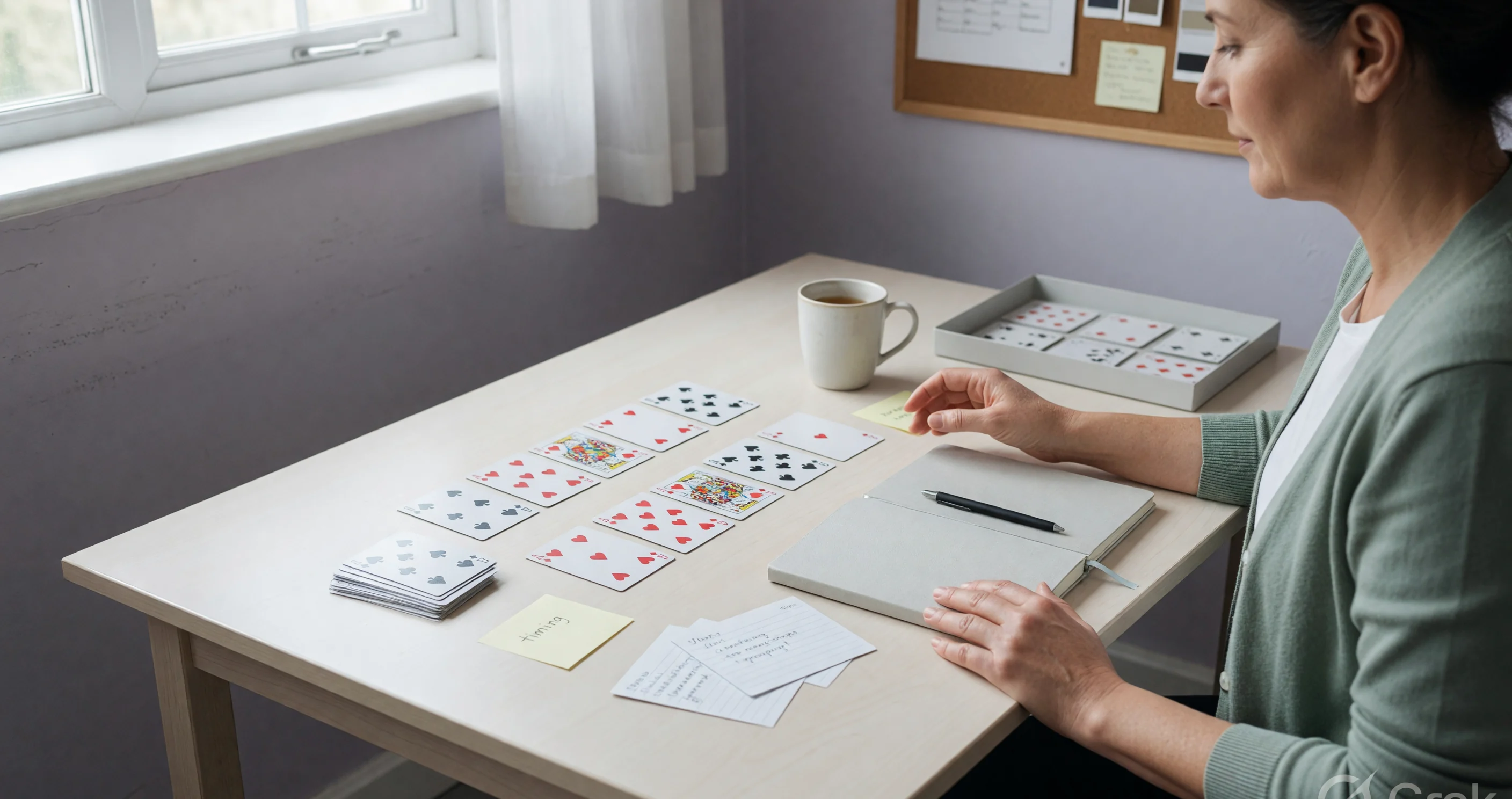
Write the four actions on paper: seat, discard, declare, support. Run them on a calm day with an empty or near-empty wallet. Date the note. After an update, run them again. That pair of notes is a review. A paragraph that says the app feels premium is not.
If the format name is absent until a deposit, record that as a fail. If discard and the open pile share one crowded corner, record that as a fail. If show locks without repeating your groups, record that as a fail. If support cannot be found from the account menu, record that as a fail.
Why this desk will not issue stars
A star compresses four different actions into one decorative number. It also tempts invention. A ledger stays ugly and useful. Ugly is acceptable. Invented precision is not.
Remote reviews also rot. A button that existed in March can move in August. Re-run the ledger on the build in your hand. Then go to payment limits, which is the next task, not a second opinion column.
Account states change the review
An active account and a held account are not the same product. A hold that blocks withdrawal but still offers a deposit is a design choice you should write down. So is a self-exclusion that still shows Play. Those observations belong here as usability facts, not as moral verdicts.
What to inspect after the ledger
Documents, holds and name match live on the safety desk. Distress and limits live on responsible play. Login mechanics live on the access guide. Keep those jobs in their rooms so this ledger stays a ledger.
A 12-minute inspection you can date
Minute one: open the seat list with as little money in the wallet as you can manage. Write every format name you can read without depositing. If the list is a collage of banners, scroll until names appear. If they never appear, you already have a fail.
Minutes two to five: open a room only if you can leave it without a penalty you do not understand. Tap discard. Use the back gesture. See whether the 13-card rail survives. A rail that resets on back is a defect class.
Minutes six to eight: find show and drop without hovering over both at once. If they share a hit target, write that down. A mis-tap on show is not a skill failure.
Minutes nine to eleven: open account, then support. Note whether the path states what it can reset. A decorative chat bubble with no scope is not support.
Minute twelve: date the note. The next update deserves a second dated note, not a memory.
Then leave this ledger. Payment limits are the next inspection, not a second set of stars.
What you keep after an inspection
A dated note with four ticks or four fails. Not a mood. Not a star. Not a quote from a stranger.
If seat names failed, do not deposit to discover them. If discard failed, do not sit a real-money Points table. If confirm failed, do not sit at all. If support failed, assume a hold will have nowhere to go.
Take the note to payment limits. Re-run it after the next update. That is the whole method.
A banner that claims millions of players is not an inspection item. Ignore it. A licence seal you cannot open is not an inspection item. Ignore it.
Your own screenshot of a missing format name is an inspection item. Keep that.
Usability is the product path. Login, customer care and KYC are manuals for other jobs. Keep them off this ledger so the ticks stay honest.
Four ticks are the whole souvenir
Seat names readable. Discard survivable. Confirm present. Support scoped. Date the four. Anything else is atmosphere. Atmosphere does not survive an update.
Ignore decorative proof
Winner walls, licence seals you cannot open, and identical store sentences are not inspection items. Your screenshot of a missing format name is. Keep that and go to payment limits.
Do not turn this ledger into a manual
Login steps, KYC classes and deletion sequences have their own rooms. If you paste them here the ticks get soft. Keep the ledger cruel and short.
Words that keep an inspection honest
Dated note
Four ticks or four fails plus a date. That object survives an update. A mood does not.
Shared target
Show and drop on one hit area is a defect. A mis-tap is not a skill failure.
Scoped support
A path that states what it can reset is support. A decorative bubble is not.
Run the twelve minutes on a second device
If you have a second phone, run the same twelve-minute inspection there. A format name that exists on a wide screen and vanishes on a 320-pixel width is still a fail. Write the width beside the date. That pair is more useful than a stranger’s rating.
Count banners before names
If you must pass three promotional sheets before a room list appears, record the count. Each sheet is a chance to tap the wrong thing. The ledger cares about that count. It does not care about the adjectives on the sheets.
Further inspection questions
What if names appear only after a deposit?
Record a fail and do not deposit to discover them. The inspection is already finished. Payment limits are the next room, not a workaround deposit.
What if I already deposited?
Finish the other three ticks anyway. A paid seat does not convert a missing confirm into a pass. Date the note and re-run after the next update.
Write the width
Add the viewport width beside the date on the inspection note. A fail at 320 pixels that vanishes at 1280 is still a fail for the phone you will actually use.
Four ticks
Seat, discard, confirm, support. Date them.
Date the ticks
Write the viewport width beside the four ticks.
Questions this route can answer
Is Spinwin real or fake?
This desk does not issue that verdict. It records what a visitor can inspect: seat, discard, declare, support. Operator identity remains a gap on the owner route.
Why is there no star score?
A score would be an invention. A ledger of visible actions is not.
Where does Play sit on this route?
Secondary. The primary next action is payment and KYC limits.